Grooming
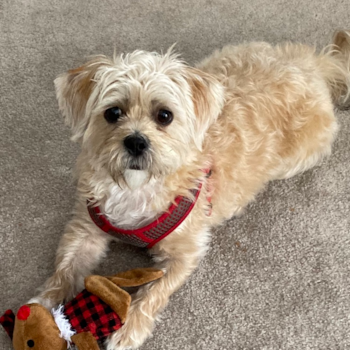
Shorkies are moderate maintenance when it comes to grooming. Generally, Shorkies have medium to long coats that need to be brushed and combed daily to be kept tangle and knot-free and to keep from matting. That being said, many Shorkie owners prefer to keep them in a puppy clip or a teddy bear cut which are much easier to groom and don’t require as much brushing.
Both Shorkies with a teddy bear cut and Shorkies with a long coat need to be bathed and taken to a professional groomer every couple of months. The Shorkie is sometimes prone to dental issues. It is beneficial for him to have an oral care routine that involves daily brushing and plenty of dental chews or dog toys designed for dental care. He should also have his ears checked and cleaned on a regular basis, and have his nails trimmed at least monthly.
Shorkies with short muzzles aren’t very fond of hot weather as they are prone to overheating. They aren’t equipped to handle extreme weather, hot or cold, and they should be kept in the shade during summer and dressed in dog coats and sweaters during winter.
Grooming Shorkies can be a task, especially if you're new to it. For a detailed guide on grooming, check out our blog on How Often Should You Bathe Your Dog?
Exercise Needs
The Shorkie is a moderately active dog known to tailor himself to his parent’s needs. He is just as happy running around chasing squirrels as he is lazing on a couch for two straight days. That being said, the Shorkie needs an average of 30 to 60 minutes of daily exercise split into two or three walks and plenty of active playtime inside the home. Having inherited a high prey drive from his Terrier parent, the Shorkie will love having a rumba or a remote-controlled toy car to chase around the house.
Health
Shorkies, like all dogs, can be prone to some of the issues that are common in small dog breeds. They may be at risk of over-heating, hypothyroidism, allergies, dental disease, and cataracts, especially during senior years. Because of their short muzzle, Shorkies may not be able to withstand long workouts or play outside during very hot weather. Short muzzles often pose difficulties with regulating body temperature. Many of the health issues that are common in the Shih Tzu and Yorkshire Terrier breeds are canceled out thanks to crossbreeding.
Lifespan
As a healthy, long-lived designer breed, the Shorkie has a lifespan of up to 16 years. These dogs are not prone to life-threatening health problems and can live as much as 18 years. Their parents, the Shih Tzu and the Yorkshire Terrier also have long lifespans and have been known to exceed 20 years of age. The oldest Shih Tzu that lived was Smokey from St. Petersburg. Smokey lived to be 28 years old. A Yorkshire Terrier named Bonny also lived to be 28 years old.
Training
Shorkies are very intelligent dogs although not always easy to train. They can sometimes be stubborn when trained as they have a short attention span and can get bored easily. Training a Shorkie puppy requires patience, lots of motivation, play and lessons combined, and consistency. Because they are part Shih Tzu, they may inherit some stubborness from their Shih Tzu parent.
Training sessions should be kept short for these pups. 10 to 15 min sessions twice every day should do the trick. These dogs love to be praised, cheered, petted, and rewarded with delicious dog treats. Giving them what they crave will get them in a cooperative state, attentive, and eager to learn. Positive reinforcement should also be used to train these adorable puppies.
Socialization should be started in early puppyhood with these adorable dogs. Shorkie puppies tend to have a high prey drive, and although friendly in nature they also tend to be a bit territorial of their space and favorite humans. To avoid this behavior passing on to adult Shorkies, it is best to start the socialization process early on and introduce them gradually to new places, people, other dogs, cats, other small pets, distractions, and sounds.
As with most family-attached dogs, Shorkies need to be trained early to handle some alone time. The Shorkie is known to suffer when left alone and is generally prone to separation anxiety. Anxiety in dogs can cause feelings of loneliness, sadness, and destructive behavior like excessive barking, chewing and going potty everywhere in a revenge fit. To avoid this and other problematic behaviors, it is best to train the Shorkie puppy early on to be comfortable when alone.
Early training is crucial for breeds like Shorkie. Dive into our blog on Early Training: Key Cavapoo Puppy Behaviors for a deeper understanding of early dog training.